Wire ferrules: choosing length and quality
Why ferrules come in 10, 12 and 18 mm lengths and what separates a good one from a no-name bag.
Affiliate disclosure: this post contains Amazon affiliate links, marked with *. As an Amazon Associate I earn from qualifying purchases. If you buy through one of these links, I get a small commission and you pay the same price.
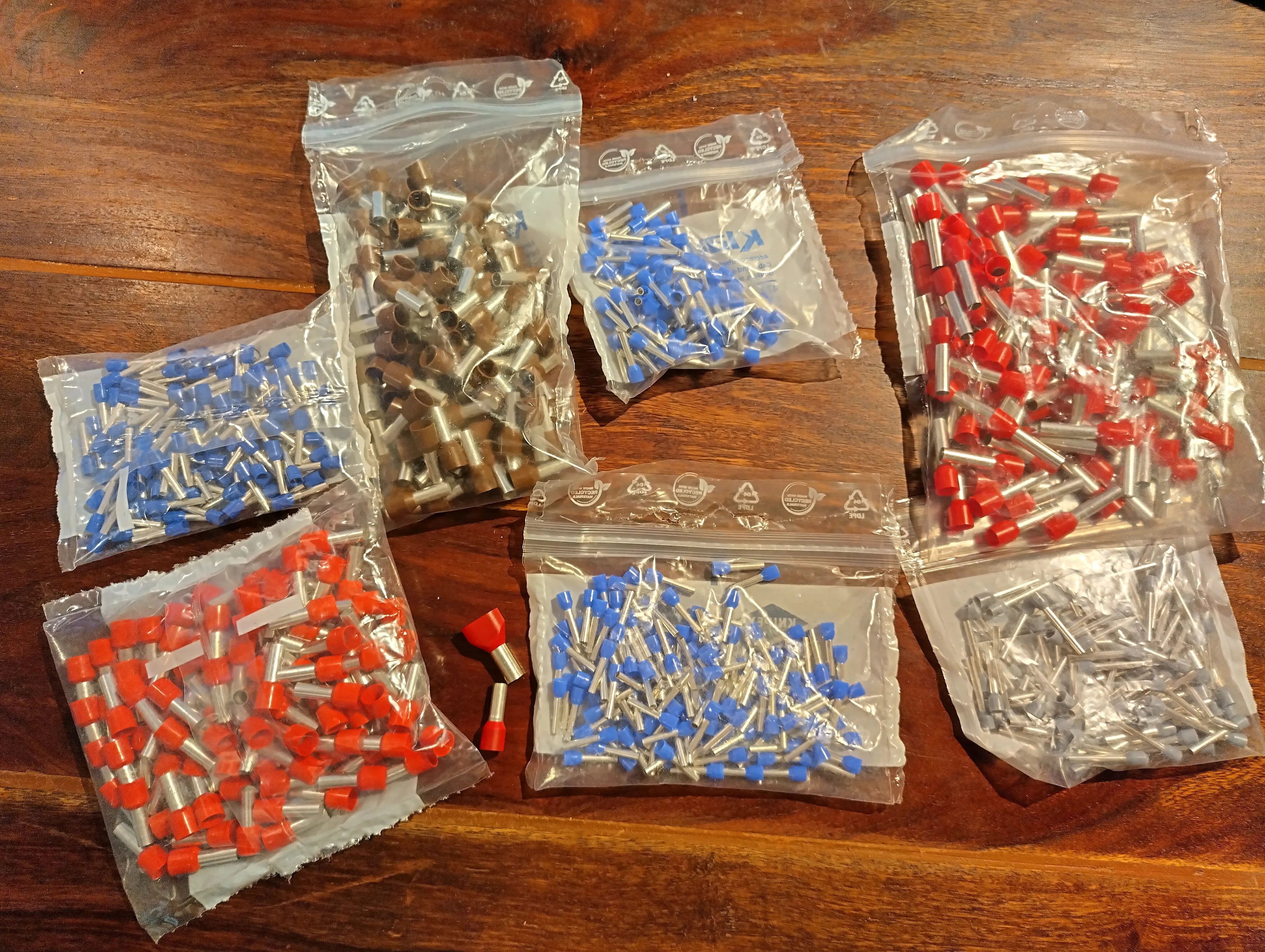
In a product photo, a brand-name ferrule looks exactly like a bag of no-names for a few cents from Temu or a third-party seller on Amazon. The differences in material, wall thickness and dimensional accuracy only show when you crimp them or months later as a warm terminal. In a panel that nobody looks into regularly, that’s worth the extra cost of brand-name ferrules to me.
Which length
Ferrules come in different sizes, usually 10, 12 and 18 mm. The length decides how much metal sits in the terminal. What counts is the strip length the device asks for: one of my circuit breakers specifies 12.5 mm on its label, other breakers in the same panel more.
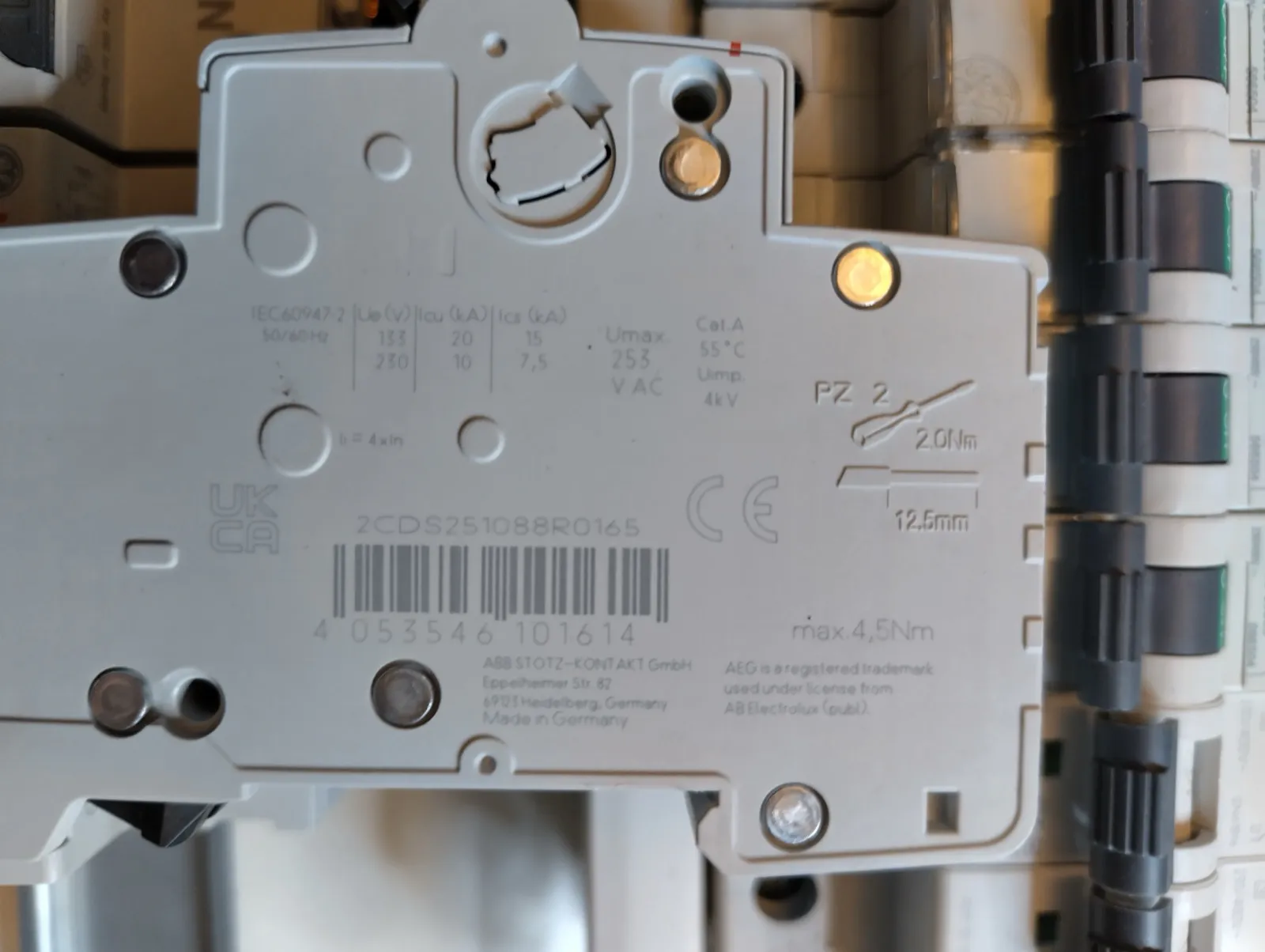
According to its label, this circuit breaker wants a 12.5 mm strip length.
A ferrule that’s too short for a deep clamp chamber puts too little metal under the screw or spring and the contact sits looser. An 18 mm ferrule has more contact area and more margin against vibration, but it doesn’t fit every terminal. Then bare copper sticks out or the terminal cover won’t close.
So for the required 12.5 mm, I crimp the 12 mm ferrule and leave about 0.5 mm of bare copper in front of it. The 18 mm ferrule wouldn’t fit in this terminal. I keep the ferrules in separate bags by length and cross-section.
How to tell good ferrules
Material: good ferrules are made of tin-plated electrolytic copper. Cheap ones skimp on the tin layer or use an inferior alloy. The result is corrosion and higher contact resistance.
Dimensional accuracy: insulated ferrules are standardized in DIN 46228-4, including a color code by cross-section. If the standard isn’t printed on the pack, I don’t buy them. If length and inner diameter vary within a pack, the crimp setting from the first ferrule no longer fits the tenth and in the worst case the ferrule splits open under the press.
Collar: polypropylene, heat-resistant to around 105 °C, ideally halogen-free. A good collar flexes instead of cracking, grips the insulation snugly and stops individual strands from buckling as you insert them.
Deformation: a good ferrule crimps into a clean square or hexagon without hairline cracks, so it clicks into push-in terminals without resistance, as found on terminal blocks, RCBOs and circuit breakers. A ferrule that’s too soft buckles on insertion and jams the spring.
Minimum wall thickness
DIN 46228-4 names two wall thicknesses: for the copper sleeve, for the plastic collar. Electrically and for crimping, is what counts.
| Cross-section | Copper wall thickness () |
|---|---|
| 0.5 to 2.5 mm² | 0.15 mm |
| 4.0 to 35.0 mm² | 0.20 mm |
Cheap imports sometimes come in at 0.10 mm or less. A wall that’s too thin splits at the edges under the crimp and exposes the strands. In push-in terminals it squashes together instead of pushing the spring open. Less copper also means less contact area, which shows up as heating under continuous load, for example at main-line branch terminals. When I don’t trust a batch, I measure an uncrimped ferrule with calipers.
Stripping
With push-in terminals especially, a bad cut catches up with you: the ferrule doesn’t seat, buckles on insertion or contact resistance creeps up over time.
- The strip length has to match the ferrule, it’s usually printed on the pack. Too short and you crimp air at the front instead of copper. Too long and strands poke out the back of the collar and touch protection is gone.
- No strand may get damaged. If a utility knife or dull pliers nick two or three wires, a 1.5 mm² cable behaves like a 1.0 mm² cable at that spot and runs warm under load. An automatic wire stripper adjusts to the cross-section and doesn’t touch the copper.
- The cut in the insulation has to be straight, otherwise the ferrule sits loosely and the collar’s strain relief is lost.
- Don’t twist the strands. For a gas-tight crimp they have to lie parallel. Twisted, they pinch each other off or break. If they fan out after stripping, the stripper pinched the cable or didn’t pull the insulation off cleanly.
How to recognize a good crimp
Gas-tight means the crimp force compresses the strands and the ferrule so tightly that no voids remain for air or moisture. That keeps contact resistance low for years.
Contact resistance is roughly inversely proportional to the metallic contact area, . Every air pocket shrinks that area.
At 16 A and a clean crimp with :
If the contact area shrinks to a fifth, the resistance rises to about five times as much:
Both are small. But the heat builds up on a few square millimeters and oxidizes the copper there. Copper oxide conducts worse, the resistance rises, it gets warmer. Over months or years, that can turn into a hot terminal.
Without an X-ray machine, you check visually and mechanically:
- At the front, the strands end flush with the ferrule. Too far back and you lose contact area, sticking out and you risk a short to the neighboring contact.
- At the back, the collar sits snugly on the insulation, with no strands squeezed out and no insulation inside the metal part.
- The profile is a symmetric square or hexagon with evenly pressed ribbing. A tool with a ratchet lock only opens once it reaches full crimp force. Crushed, torn at the edges or with material squeezed out to the sides (ears), the connection is scrap. The cause is usually a tool without parallel jaws, a ferrule that’s too thin or the wrong cross-section.
- Pull test: hold the cable and pull on the ferrule with moderate force. If it comes off, the crimp force was too low.
Not mandatory everywhere
Some RCDs also allow bare stranded wire in their terminals according to the wiring diagram, it’s in the datasheet. I still use a ferrule, because bare strands fray after being clamped and unclamped a few times.
Ferrules I use
| Cross-section | Type | Manufacturer | Product | Length | Pieces per pack |
|---|---|---|---|---|---|
| 2.5 mm² | single | Phoenix Contact | AI 2,5-12 BU* | 12 mm | 100 |
| 2.5 mm² | single | Klauke | 47312* | 12 mm | 1000 |
| 2.5 mm² | single | Knipex | 97 99 354* | 12 mm | 200 |
| 2.5 mm² | single | Zoller+Fröhlich | V30AE000053* | 12 mm | 100 |
| 10 mm² | single | Phoenix Contact | AI 10-12 RD* | 12 mm | 100 |
| 10 mm² | single | Klauke | 17612* | 12 mm | 100 |
| 10 mm² | single | Knipex | 97 99 337* | 12 mm | 100 |
| 10 mm² | single | Zoller+Fröhlich | V30AE000061* | 12 mm | 20 |
| 10 mm² | twin | Knipex | 97 99 377* | 12 mm | 50 |
| 10 mm² | twin | Zoller+Fröhlich | V30AE006259* | 12 mm | 20 |
A test
I picked a few ferrules from my collection, laid them side by side and crimped them.
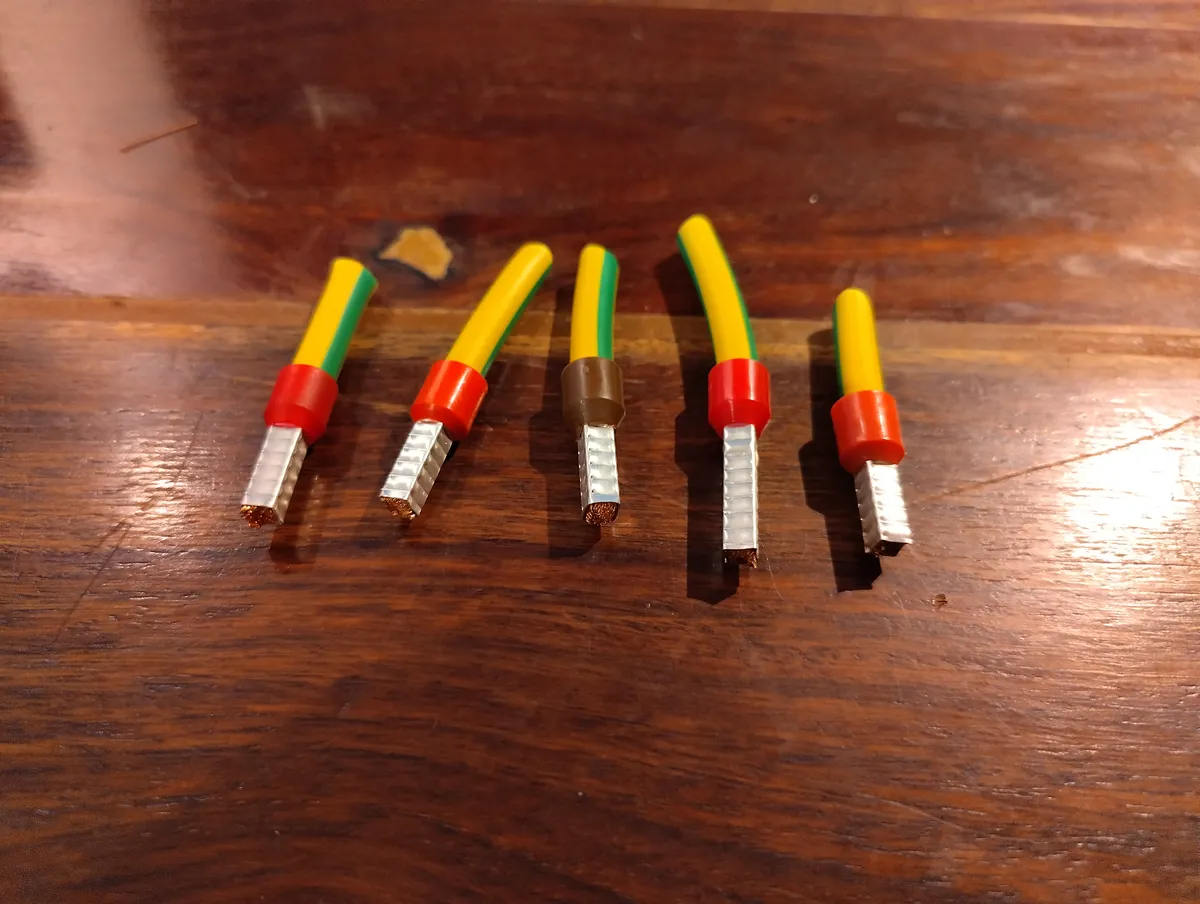
From left to right: Zoller+Fröhlich, Parkside, Klauke, Intercable and Phoenix Contact.
Visually, the Zoller+Fröhlich ferrules make the best impression. The plastic collar looks high-quality and the crimp looks good. Klauke comes next and also stands out. These two brands clearly set themselves apart at first glance. Among the rest, I don’t see much difference in quality.
But what happens when you screw the ferrules into a circuit breaker at 5 Nm? All ferrules have a square crimp and sit in the terminal with a flat side facing the screw.
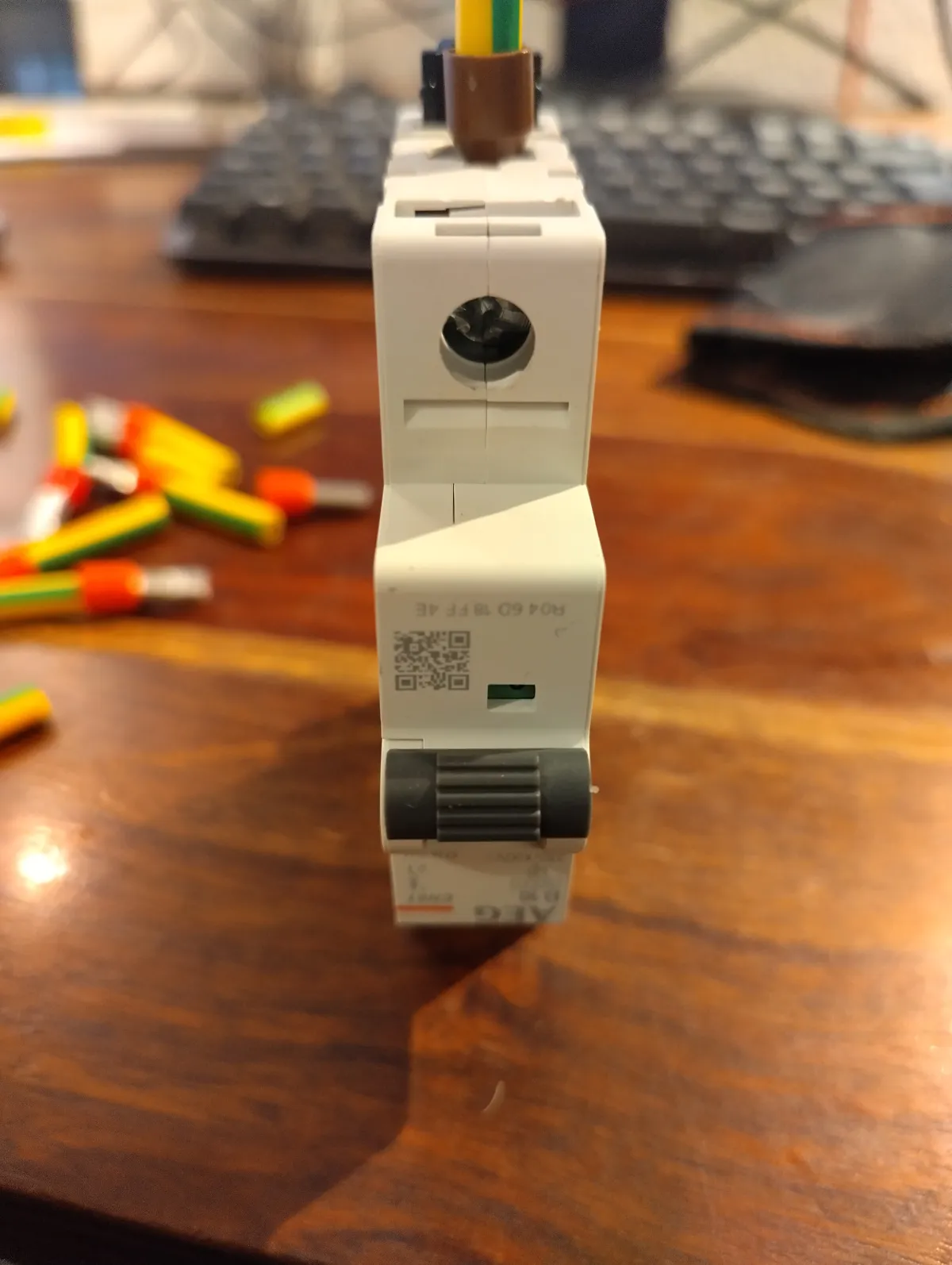
Each ferrule goes into the terminal once at 5 Nm.
After each ferrule had been screwed in once, the first differences show.
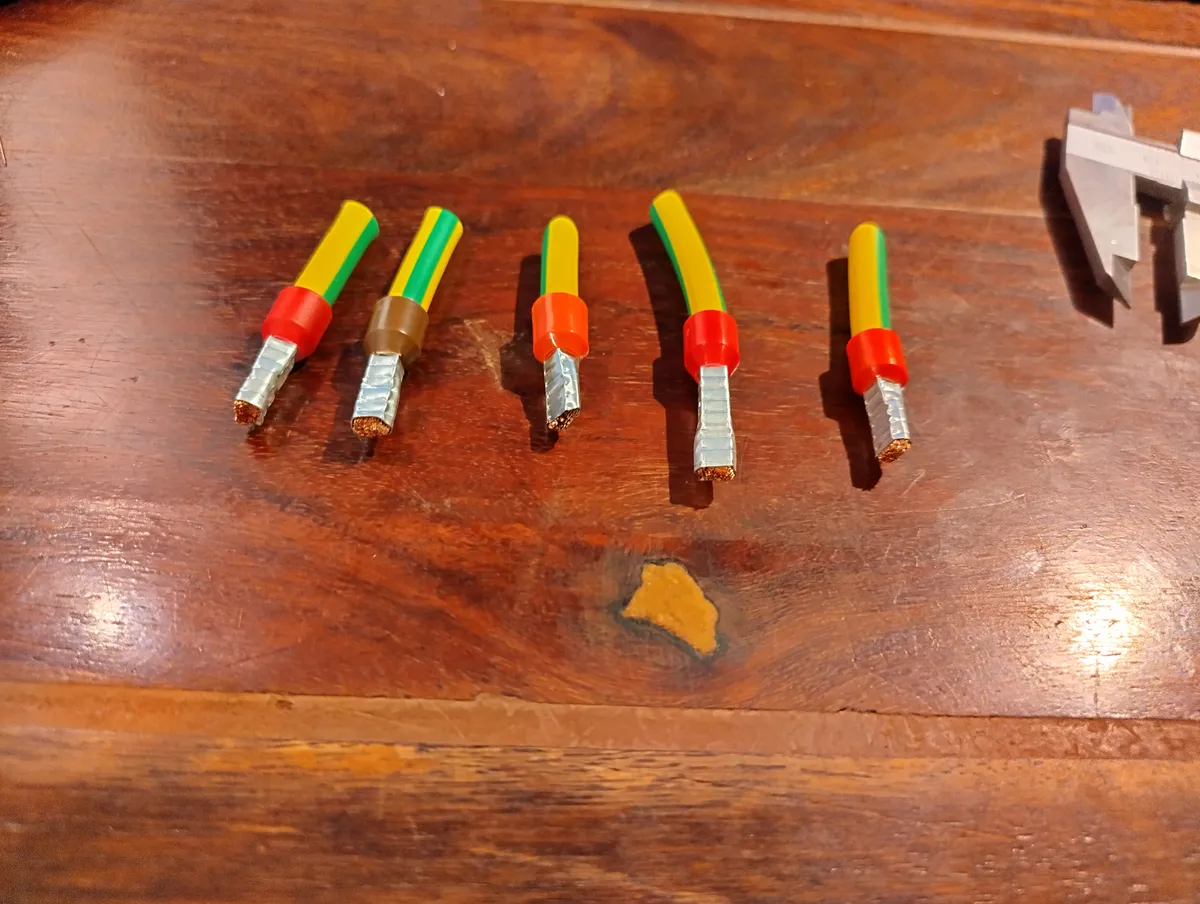
The ferrules after being screwed in once, from left to right: Zoller+Fröhlich, Parkside, Klauke, Intercable and Phoenix Contact.
Zoller+Fröhlich, Klauke and Intercable deformed the least. With Phoenix Contact and Parkside, it’s more obvious that overtightening leaves its marks. After the second tightening, it gets even clearer on those two.
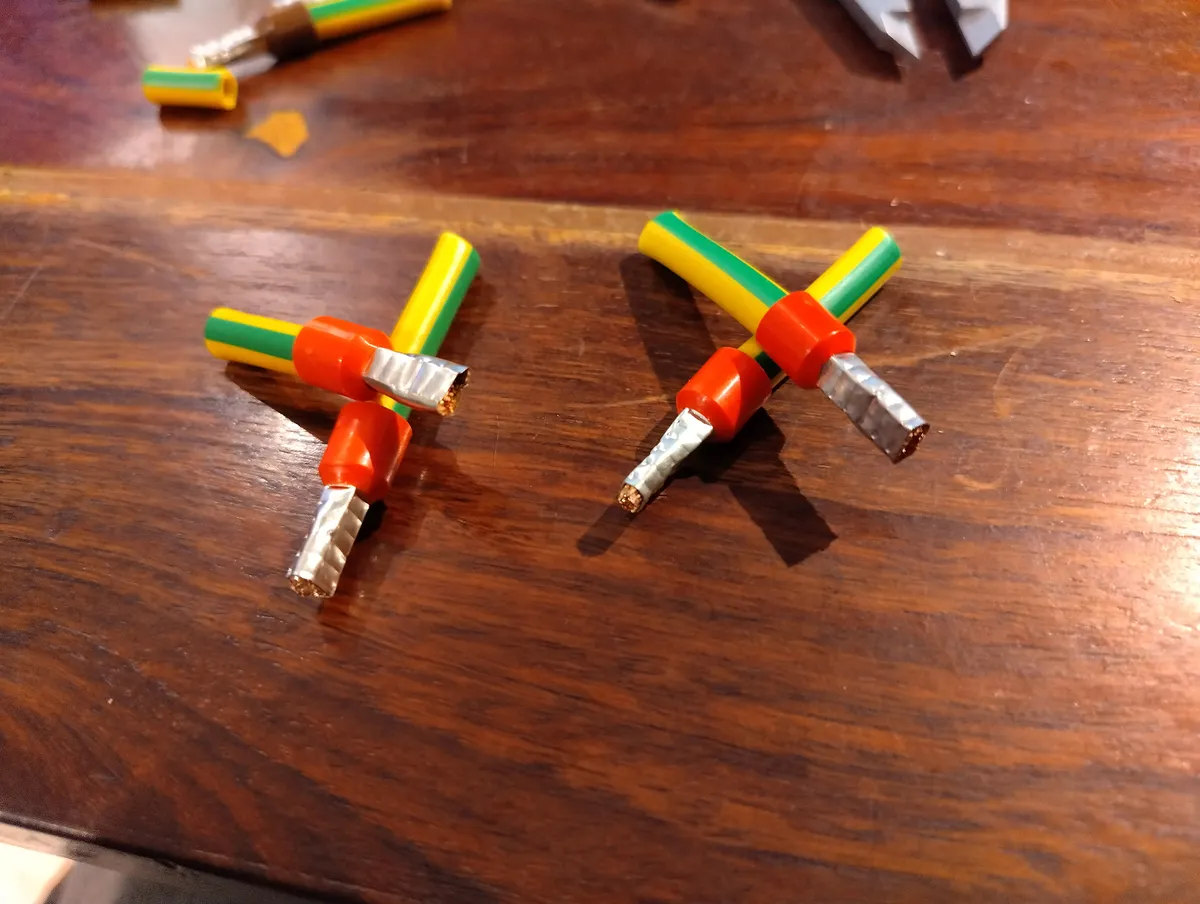
After the second tightening: Parkside on the left, Phoenix Contact on the right.
Where do such big differences come from? Probably from the wall thickness of the ferrule. So I measured it with my calipers.
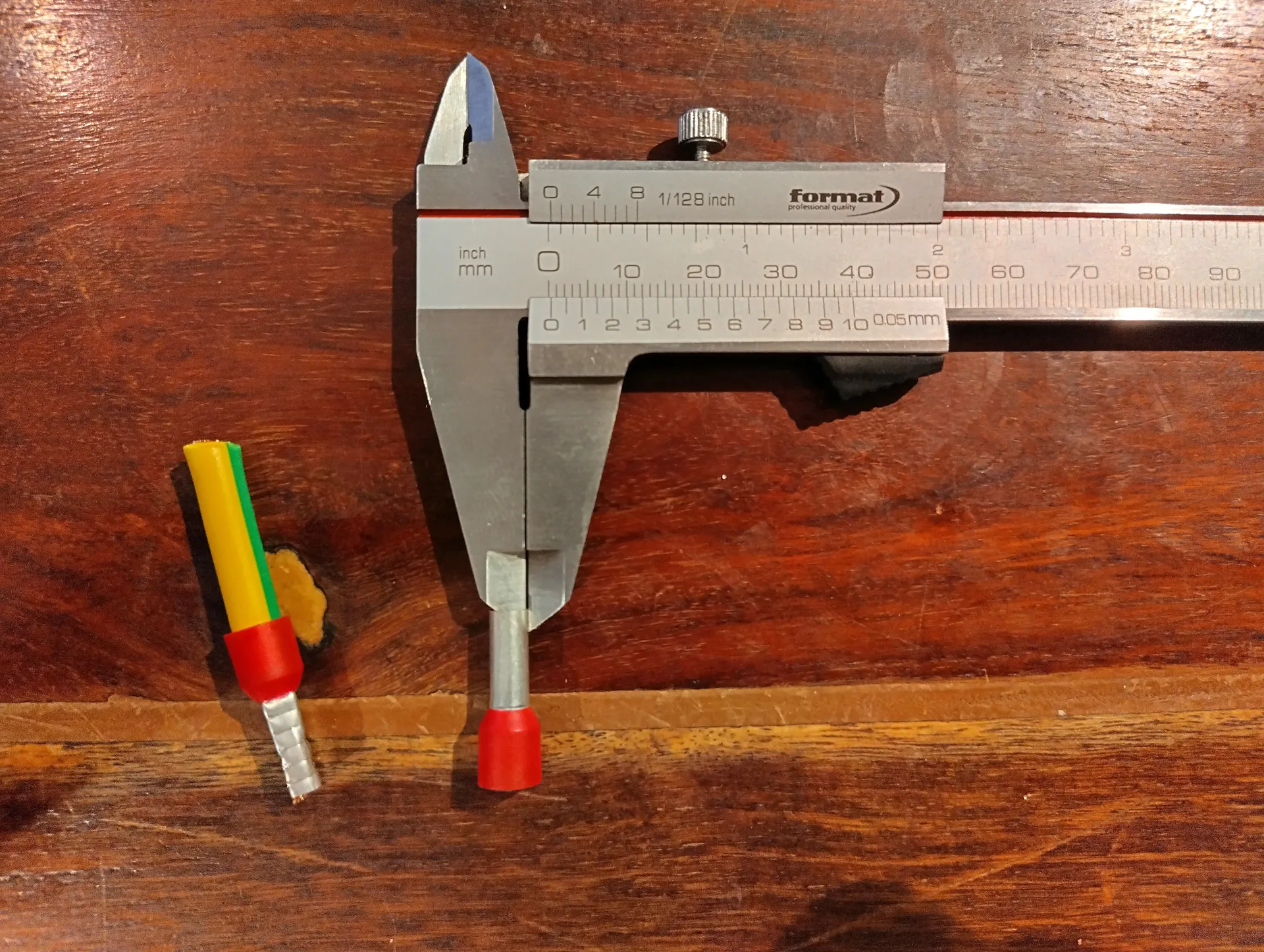
Zoller+Fröhlich: 0.30 mm 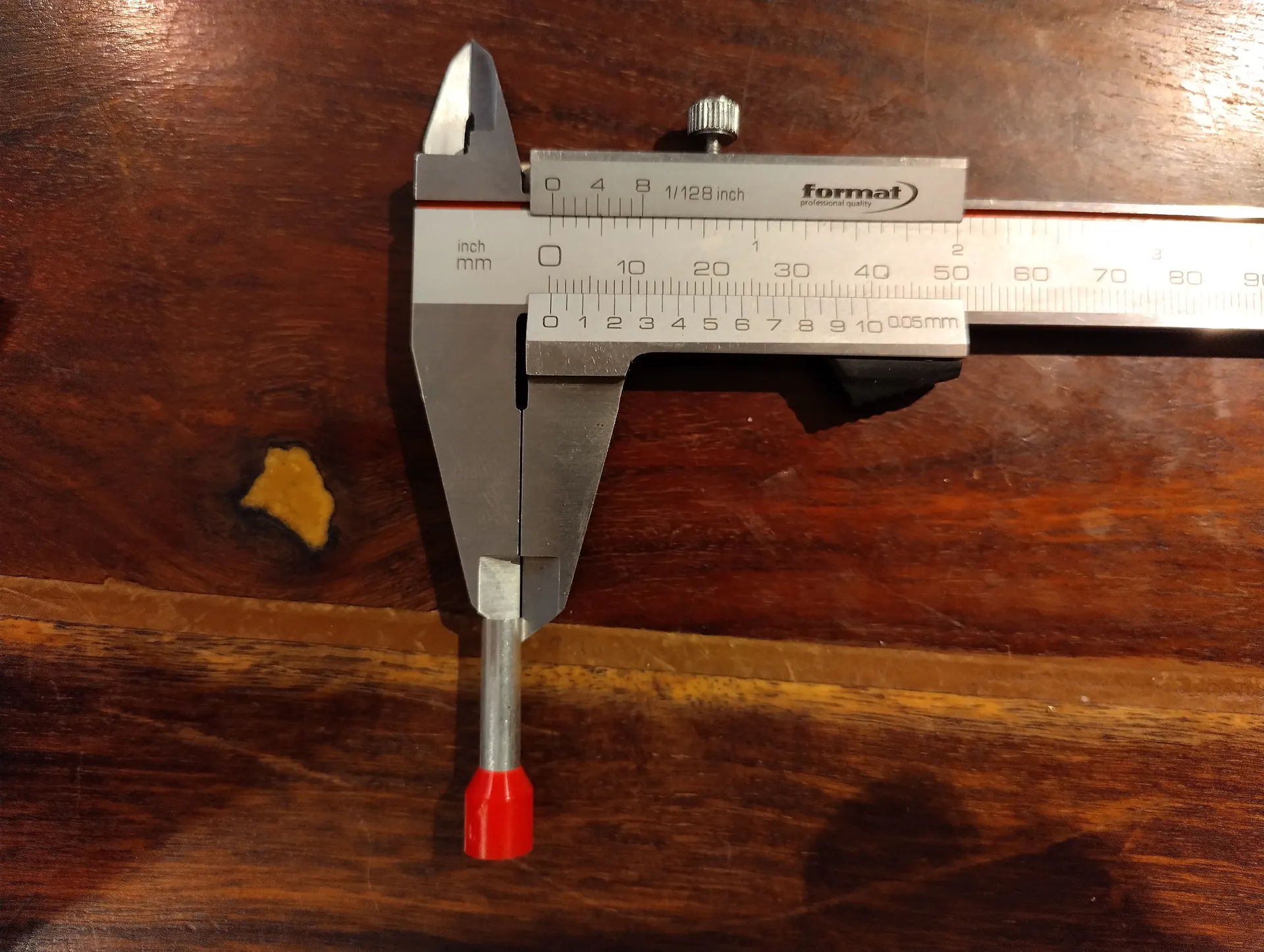
Intercable: 0.275 mm 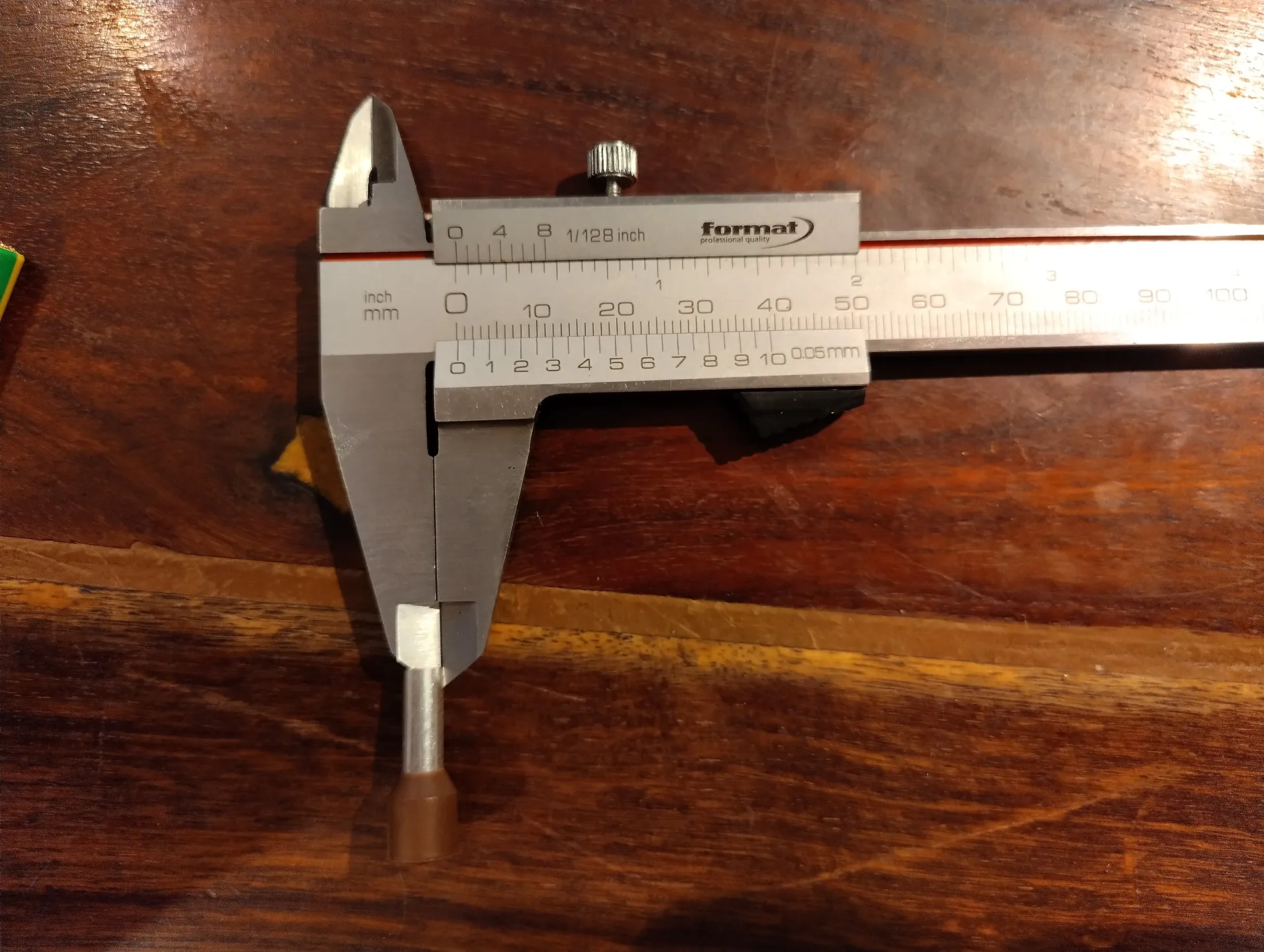
Klauke: 0.15 mm 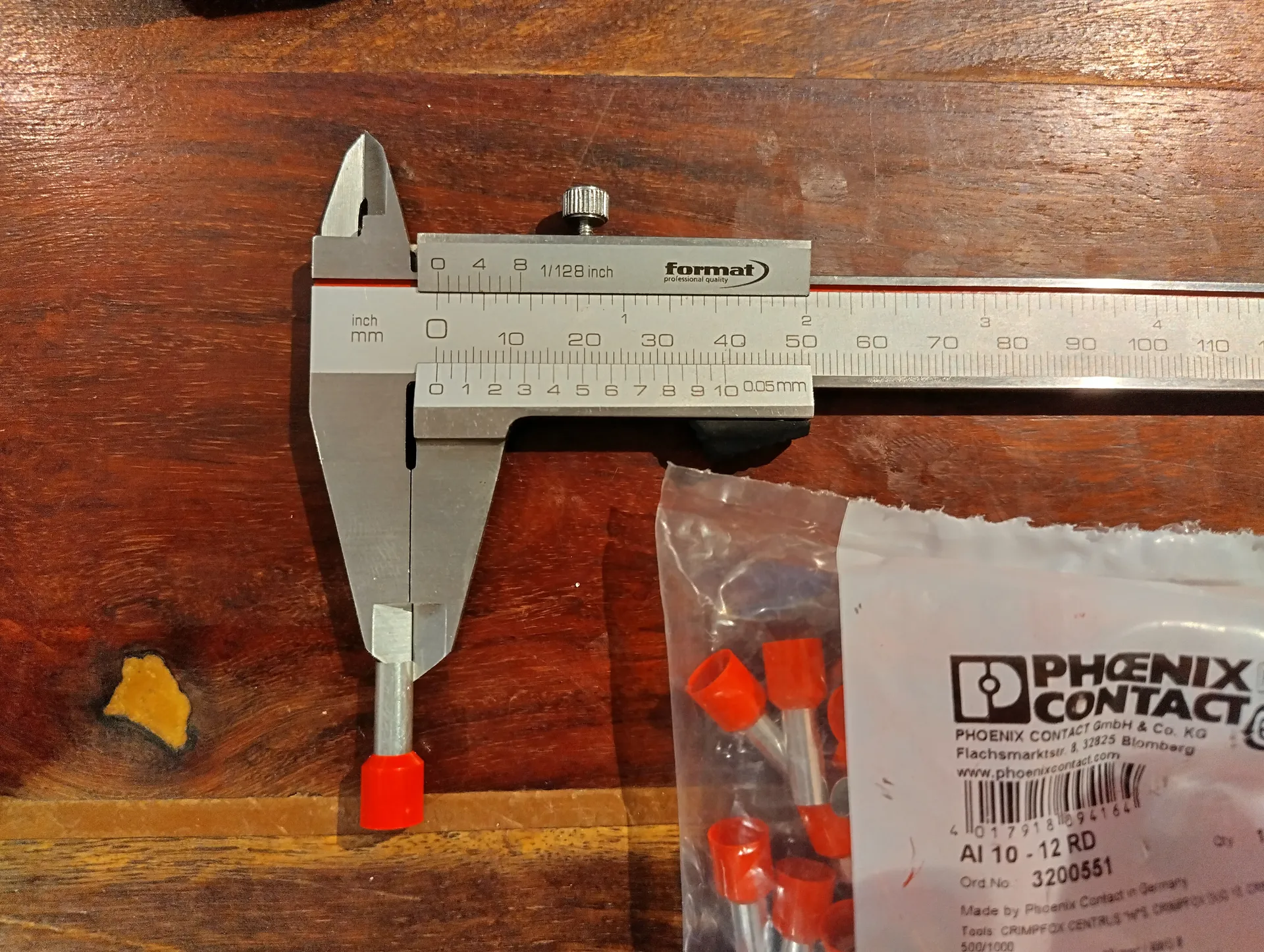
Phoenix Contact: 0.15 mm 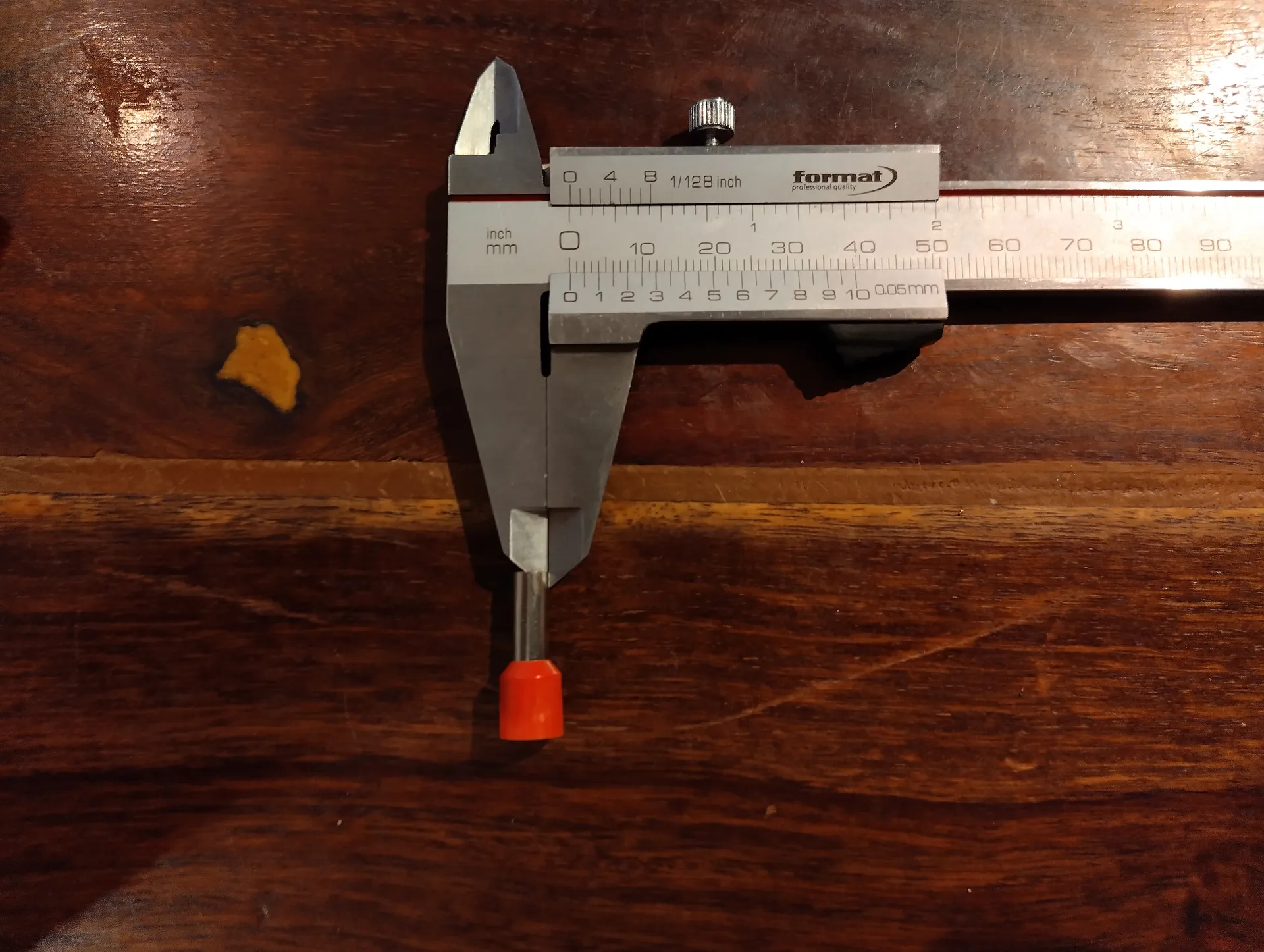
Parkside: 0.15 mm
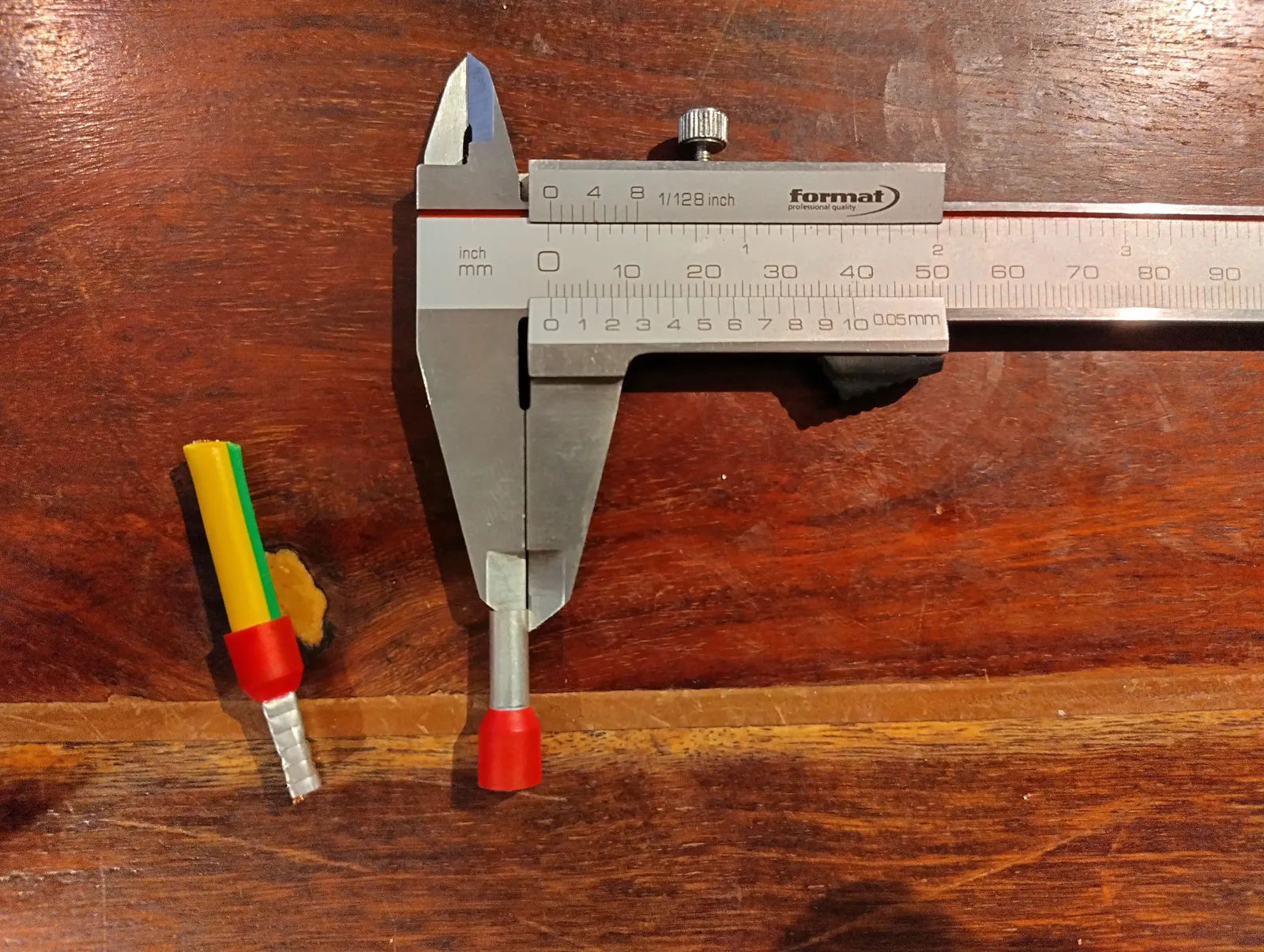
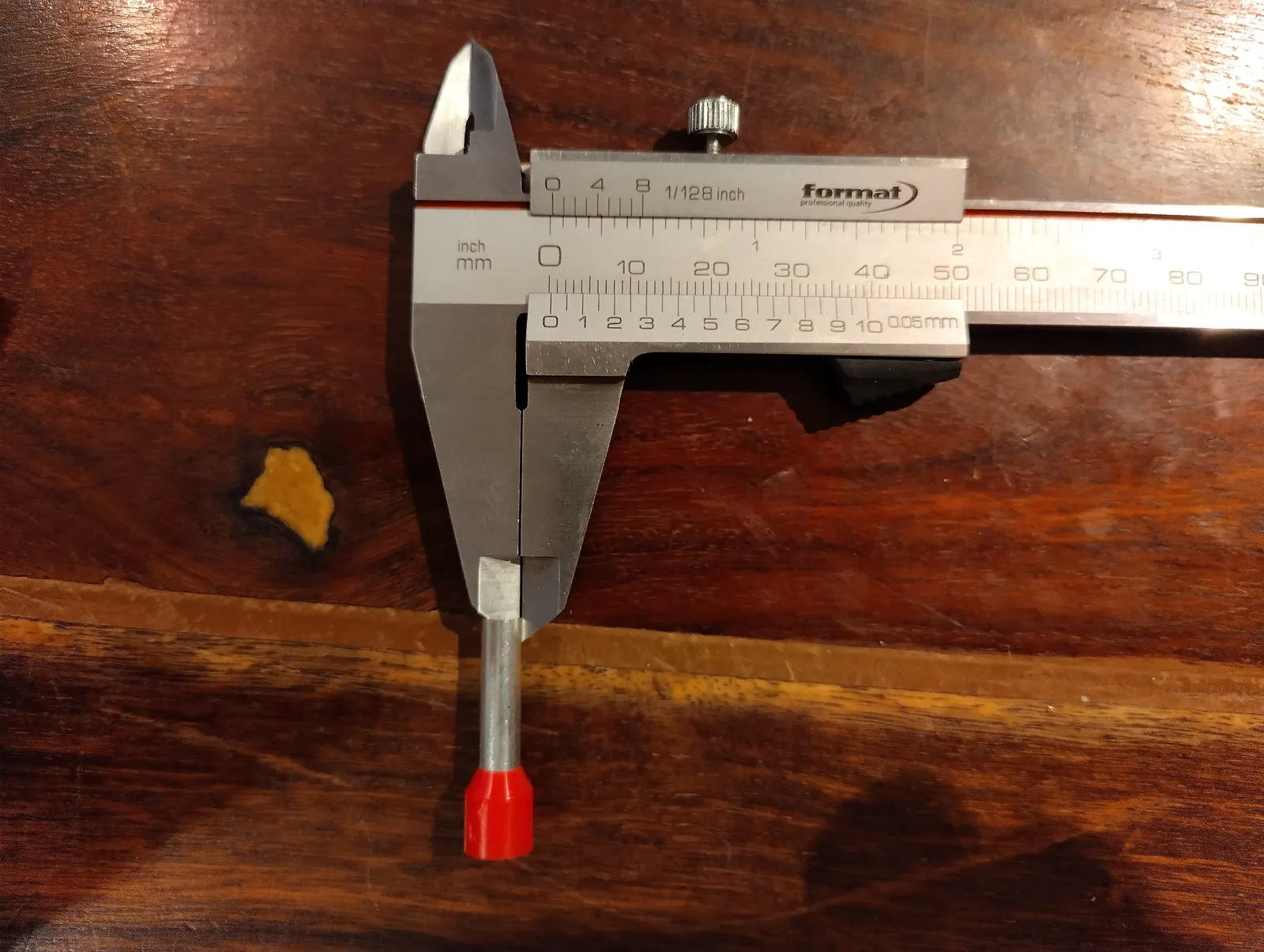
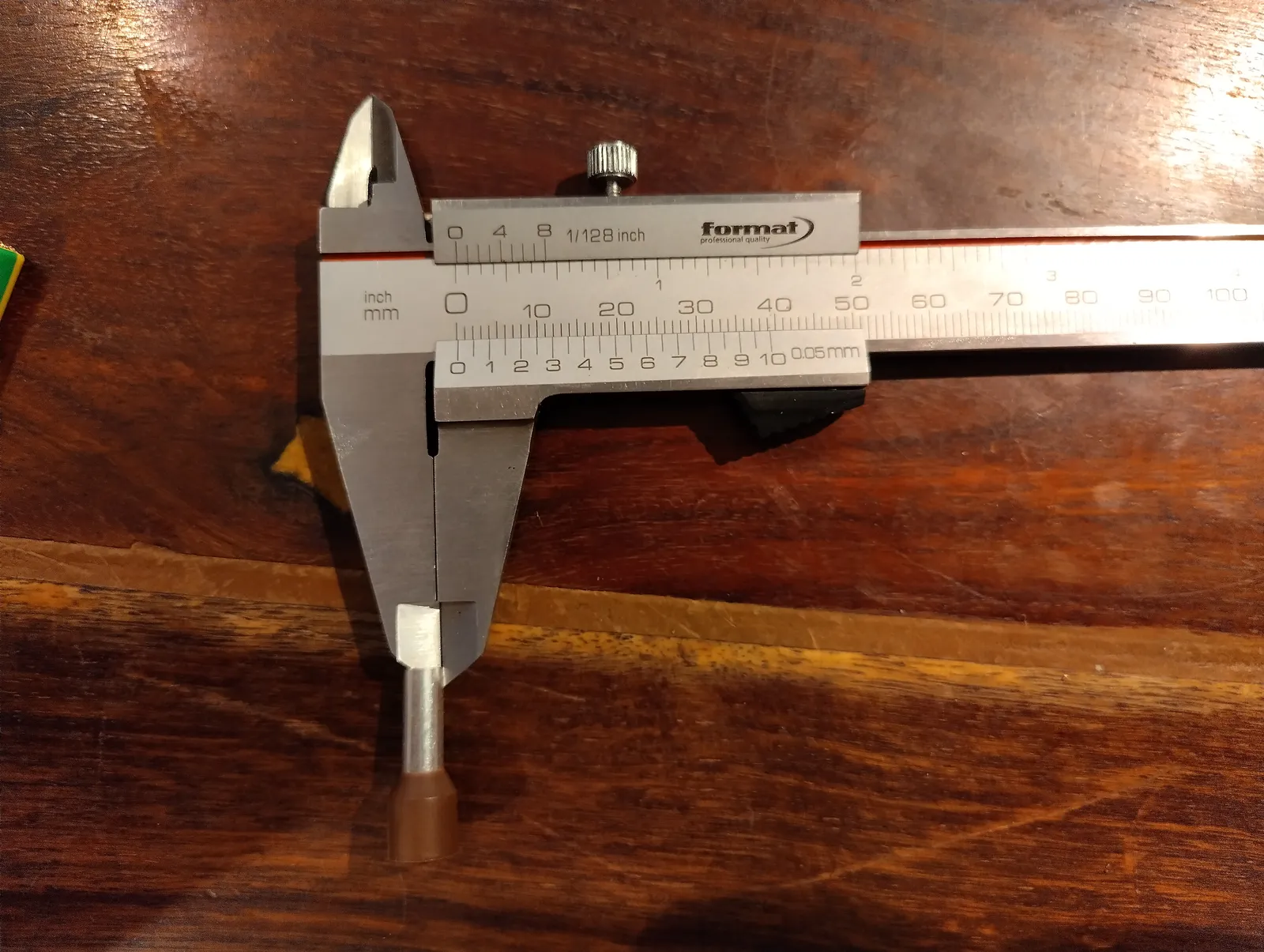
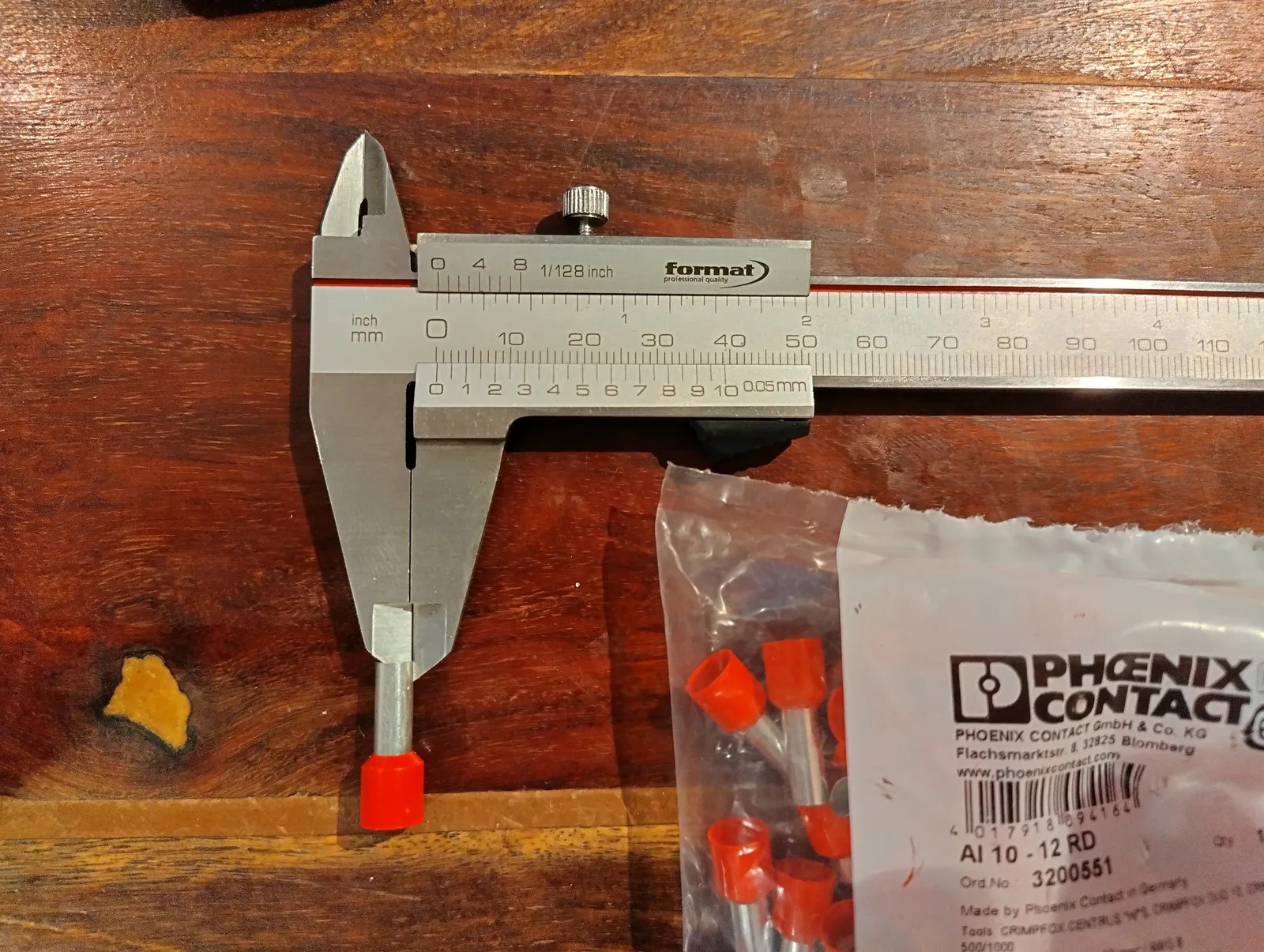
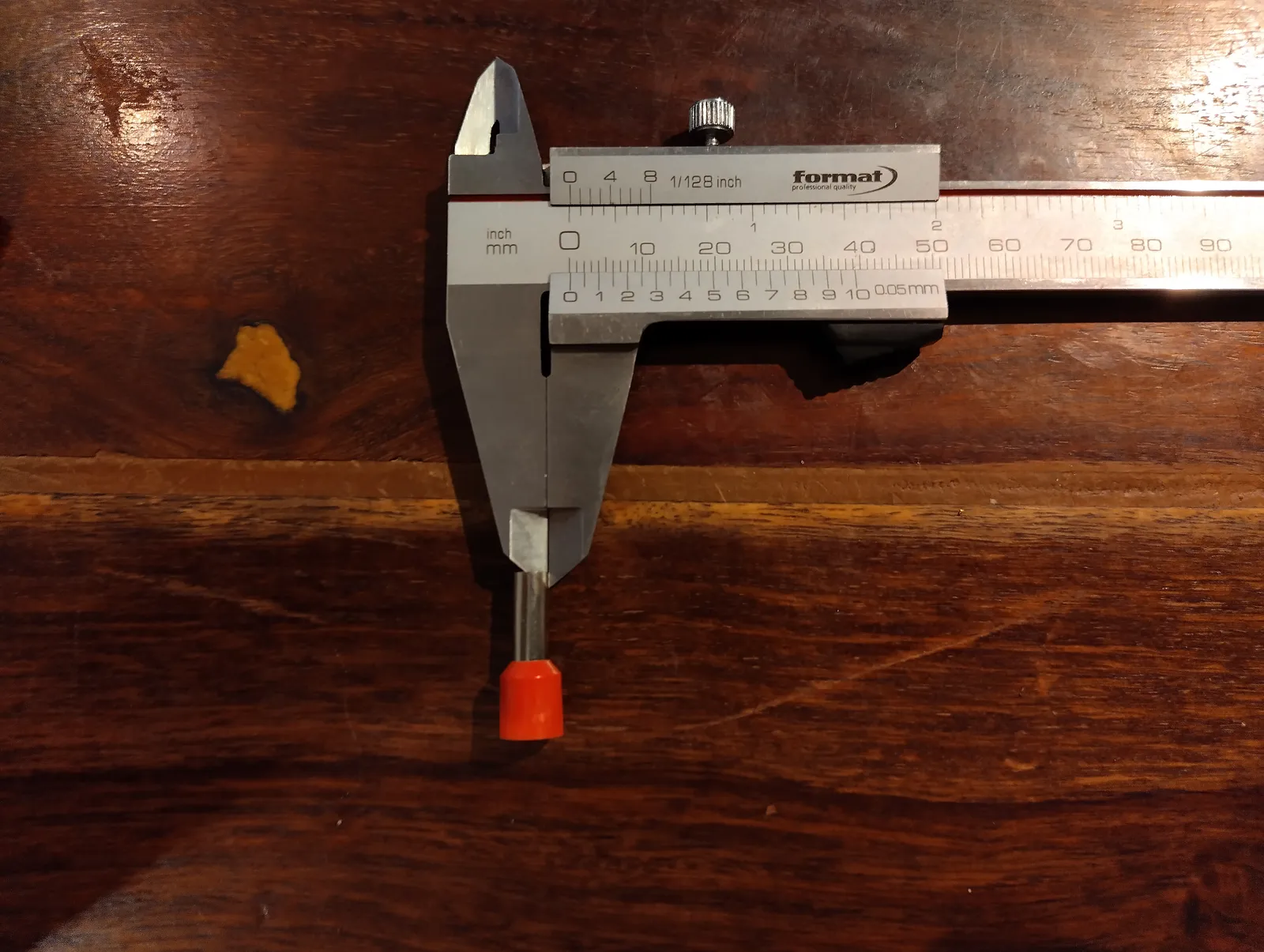
Calipers with a 0.05 mm resolution are coarse for values like these, though. And wall thickness alone doesn’t explain it: Klauke barely deformed, yet it measures 0.15 mm like Phoenix Contact and Parkside. The hardness of the copper and how well the ferrule fits the conductor probably play a part too.
They’ll probably all work. But somehow the Zoller+Fröhlich ferrules left the best impression. If you want a high-quality premium ferrule, go for Zoller+Fröhlich.
Tool and dies
I crimp with the Knipex 97 43 200 A*. The interchangeable head only supplies the force, the die does the crimping. Three dies cover almost everything in a sub-distribution board:
- 97 49 08* for 0.25 to 6 mm², single
- 97 49 09* for 10, 16 and 25 mm², single
- 97 49 18* for twin ferrules up to 2×16 mm²
How to crimp thicker twin ferrules up to 16 mm², with a photo walkthrough of every cross-section, is in the post on twin ferrules.
Installation and connection by a qualified electrician only, see Terms & Safety.
Comments
Write a comment